

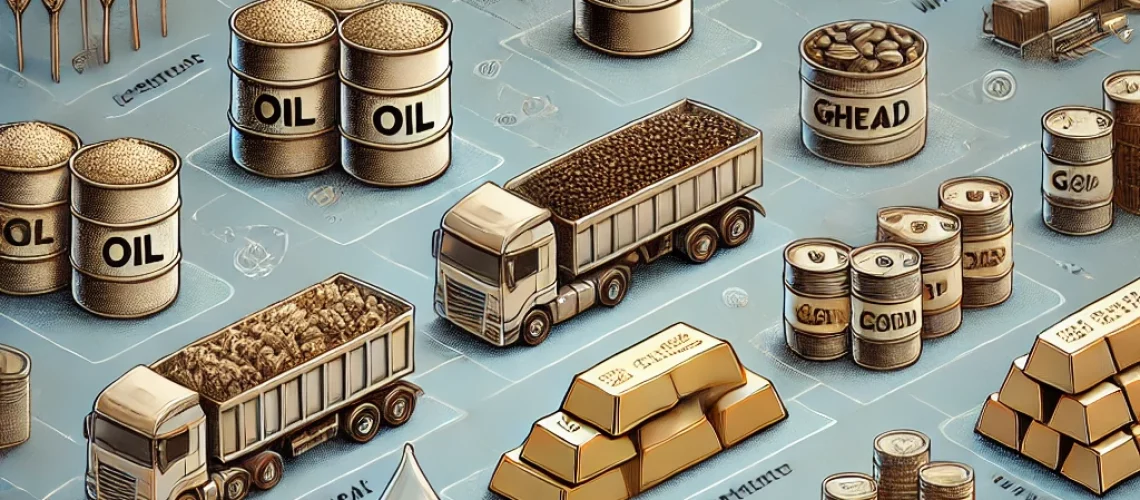
A commodity plays a fundamental role in the global economy, acting as the backbone of trade, investment, and industrial production. From raw materials like oil and gold to agricultural products such as wheat and coffee, commodities influence the financial markets, determine pricing structures, and impact the livelihoods of millions worldwide. Investors, corporations, and governments alike rely on commodities to hedge against risk, manage inflation, and ensure supply chain stability. Understanding the intricacies of commodities requires a deep dive into their types, markets, trading mechanisms, and economic significance.
What Is a Commodity?
In economic and financial terms, a commodity is a basic good or raw material that is interchangeable with other goods of the same type. Its value is determined largely by market forces, supply and demand, and geopolitical factors. Unlike manufactured products, commodities are often standardized and homogenous, making them suitable for bulk trading in global markets.
Key Characteristics of Commodities
- Fungibility: One unit of a commodity is generally equivalent to another unit of the same grade or quality, allowing for easy trading.
- Standardization: Commodities are graded according to quality and specifications, ensuring consistency in global markets.
- Market-Driven Pricing: Prices fluctuate based on supply, demand, and external factors such as political events, natural disasters, and economic policies.
- Global Relevance: Commodities often have international significance because they serve as essential inputs for industries, energy production, or food supply.
Types of Commodities
Commodities can be broadly categorized into two main groups: hard commodities and soft commodities. Understanding these categories is crucial for investors, traders, and businesses involved in supply chain management.
Hard Commodities
Hard commodities are natural resources that are mined or extracted. They generally include:
- Energy Resources: Crude oil, natural gas, coal, and uranium serve as critical inputs for power generation, transportation, and manufacturing.
- Metals: Precious metals like gold, silver, and platinum, as well as industrial metals such as copper, aluminum, and iron, are essential for construction, electronics, and automotive industries.
- Minerals: Rare earth elements and industrial minerals are crucial for high-tech production and chemical processes.
Soft Commodities
Soft commodities are typically agricultural products or livestock, which require cultivation or breeding. Examples include:
- Grains and Cereals: Wheat, rice, corn, and barley are staples for global food supply.
- Cash Crops: Coffee, sugar, cocoa, cotton, and tea drive agricultural trade and commodity markets.
- Livestock and Meat: Cattle, hogs, and poultry are traded in futures markets and form the backbone of meat supply chains.
- Perishable Goods: Fruits, vegetables, and dairy products are increasingly traded through specialized commodity exchanges with logistical systems to ensure freshness.
Commodity Markets and Trading
Commodities are primarily traded through specialized markets known as commodity exchanges, which provide a regulated environment for buying, selling, and hedging risks. Trading can occur through spot markets or futures contracts, each serving distinct purposes.
Spot Markets
Spot markets, or cash markets, involve the immediate delivery of commodities at current market prices. These markets are crucial for businesses that require raw materials for production and cannot wait for future delivery.
Futures and Derivatives Markets
Futures contracts allow traders to buy or sell a commodity at a predetermined price and date. These contracts help in:
- Hedging: Businesses and producers lock in prices to protect against volatility in raw material costs.
- Speculation: Traders seek profits from price fluctuations without necessarily taking physical delivery of the commodity.
- Price Discovery: Futures markets contribute to transparent pricing by reflecting supply-demand dynamics and market sentiment.
Major commodity exchanges include the Chicago Mercantile Exchange (CME), London Metal Exchange (LME), and Intercontinental Exchange (ICE). Each specializes in various commodities, providing liquidity and standardized trading platforms.
Factors Influencing Commodity Prices
Commodity prices are influenced by a complex interplay of factors that can be categorized into fundamental, geopolitical, and market sentiment elements.
Fundamental Factors
- Supply and Production: Crop yields, mining output, and energy production directly impact availability.
- Demand Patterns: Industrial growth, population trends, and seasonal consumption affect global demand.
- Weather Conditions: Agriculture-dependent commodities are highly sensitive to rainfall, temperature variations, and natural disasters.
Geopolitical Factors
- Trade Policies: Tariffs, quotas, and trade agreements can significantly alter commodity flows and pricing.
- Political Stability: Conflicts, sanctions, or instability in resource-rich regions influence supply.
- Currency Fluctuations: Commodities priced in U.S. dollars are sensitive to exchange rate variations affecting international buyers.
Market Sentiment
- Investor Behavior: Speculative activities, hedge fund positions, and market psychology can amplify price movements.
- Technological Developments: Innovations in extraction, logistics, and production can affect supply chains and pricing.
- Global Events: Pandemics, economic crises, and energy transitions impact both supply and demand globally.
Commodity Investment Strategies
Commodities are not only vital for industrial use but also serve as investment vehicles. Investors use commodities to diversify portfolios, hedge against inflation, and exploit market volatility.
Physical Investment
Investing directly in commodities such as gold bars, silver coins, or agricultural products allows investors to own tangible assets. Storage and security are critical considerations in this approach.
Commodity Futures and Options
Futures and options provide leveraged exposure to price movements. This strategy requires careful risk management and market knowledge due to volatility and potential losses.
Exchange-Traded Funds (ETFs)
Commodity ETFs track the price of a specific commodity or a basket of commodities. They offer investors liquidity, diversification, and convenience without the need for physical storage.
Commodity Mutual Funds
These funds invest in companies involved in commodity production or commodity-linked derivatives. They provide indirect exposure while spreading risk across multiple assets.
Economic Importance of Commodities
Commodities underpin nearly every sector of the global economy. Their economic significance includes:
- Industrial Production: Metals, energy, and minerals are vital for construction, manufacturing, and technology sectors.
- Food Security: Agricultural commodities ensure food availability and stabilize nutrition markets.
- Energy Supply: Fossil fuels and renewable energy resources power economies and drive transportation networks.
- Investment and Wealth Preservation: Commodities like gold serve as safe-haven assets during market uncertainty.
- Trade Balance: Export of commodities contributes significantly to national revenues, particularly for resource-rich countries.
Challenges in Commodity Markets
Despite their importance, commodity markets face several challenges:
- Volatility: Prices can fluctuate rapidly due to external shocks, affecting both producers and investors.
- Supply Chain Disruptions: Political instability, climate change, or logistical bottlenecks can interrupt supply.
- Speculative Pressure: Excessive speculation can distort prices, making them unreflective of underlying supply-demand fundamentals.
- Environmental Concerns: Mining, energy extraction, and agricultural practices can have significant ecological impacts, prompting regulatory scrutiny.
The Future of Commodities
The commodity landscape is evolving with sustainability, technology, and global economic shifts:
- Renewable Energy Commodities: Lithium, cobalt, and rare earth metals are becoming critical for batteries and renewable technologies.
- Sustainable Agriculture: Demand for organic and ethically produced crops is influencing commodity production practices.
- Digital Trading Platforms: Blockchain and advanced data analytics are enhancing transparency, efficiency, and traceability in commodity markets.
- Global Supply Chain Resilience: Businesses increasingly diversify suppliers to mitigate geopolitical and environmental risks.
FAQs About Commodities
1. How does a commodity differ from a regular product?
A commodity is a standardized, fungible good that is interchangeable with others of the same type, while regular products may vary in quality, brand, and features, limiting direct substitution.
2. What are the most traded commodities in the world?
Some of the most actively traded commodities include crude oil, gold, silver, natural gas, corn, wheat, coffee, and copper due to their global demand and industrial importance.
3. Can individuals invest in commodities?
Yes, individuals can invest in commodities through physical ownership, futures contracts, ETFs, mutual funds, and commodity-linked derivatives.
4. Why do commodity prices fluctuate so much?
Prices fluctuate due to supply-demand imbalances, geopolitical events, currency changes, investor speculation, and environmental or technological developments affecting production or consumption.
5. What role do commodities play in hedging against inflation?
Commodities often maintain intrinsic value, especially precious metals and energy products. Investors use them to preserve purchasing power when fiat currencies lose value due to inflation.
6. How are agricultural commodities impacted by climate change?
Changes in temperature, rainfall, and extreme weather events can reduce crop yields, disrupt harvest cycles, and increase volatility in commodity prices.
7. What is the significance of futures contracts in commodities trading?
Futures contracts allow producers and consumers to lock in prices for future delivery, hedge against price volatility, and provide a mechanism for market participants to manage financial risk effectively.
8. Are renewable energy materials considered commodities?
Yes, lithium, cobalt, and rare earth metals are essential for batteries, solar panels, and wind turbines, making them increasingly important commodities in the global energy transition.
9. How do geopolitical events affect commodities?
Conflicts, trade sanctions, and policy changes can restrict supply, alter demand patterns, and increase price volatility across commodity markets.
10. Can commodities provide diversification in investment portfolios?
Yes, commodities are often uncorrelated with equities and bonds, providing diversification benefits and risk mitigation during periods of market uncertainty.
